Monodeck II
MIDI Controller for Monolake Live [2005]
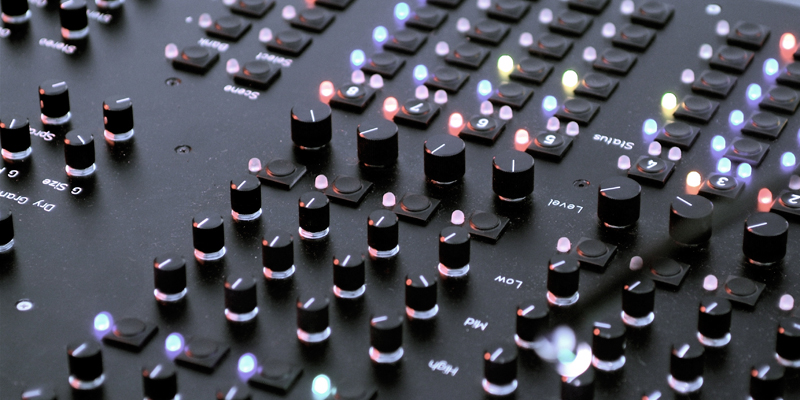
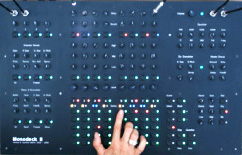
Monodeck II is a dedicated MIDI control surface for Ableton Live, created before commercial solutions were available and tailored to accommodate the specific needs of Monolake Live performances in 2005.
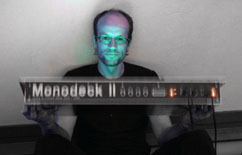
Performing my music live is an important part of my artistic expression. Performing live requires instruments that can truly be played.
In 2003, I decided to build my first MIDI controller, the Monodeck: An instrument that gave me more tactile access to my music. No commercial product matched my requirements, so I created my own, a box with knobs, LEDs, and buttons, featuring a layout optimized for performance. It worked much better than expected; my concerts became more spontaneous, and I became quite skilled at playing it.
The Monodeck was made from internal parts of a Doepfer Drehbank controller, along with additional Doepfer boards to control a small number of buttons and LEDs, plus a MIDI/USB interface housed in a wooden box.
However, that Monodeck only served as an additional interface and could not replace operating the computer with a mouse or looking at the screen during concerts.
After three years of heavy touring, it also started to fall apart. It was time to build a new version: larger, more precise, with more possibilities, and built as an industrial-grade prototype: black aluminum, white engraved text, no plastic, designed to survive rough touring a bit longer...
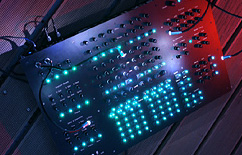
Building Monodeck II
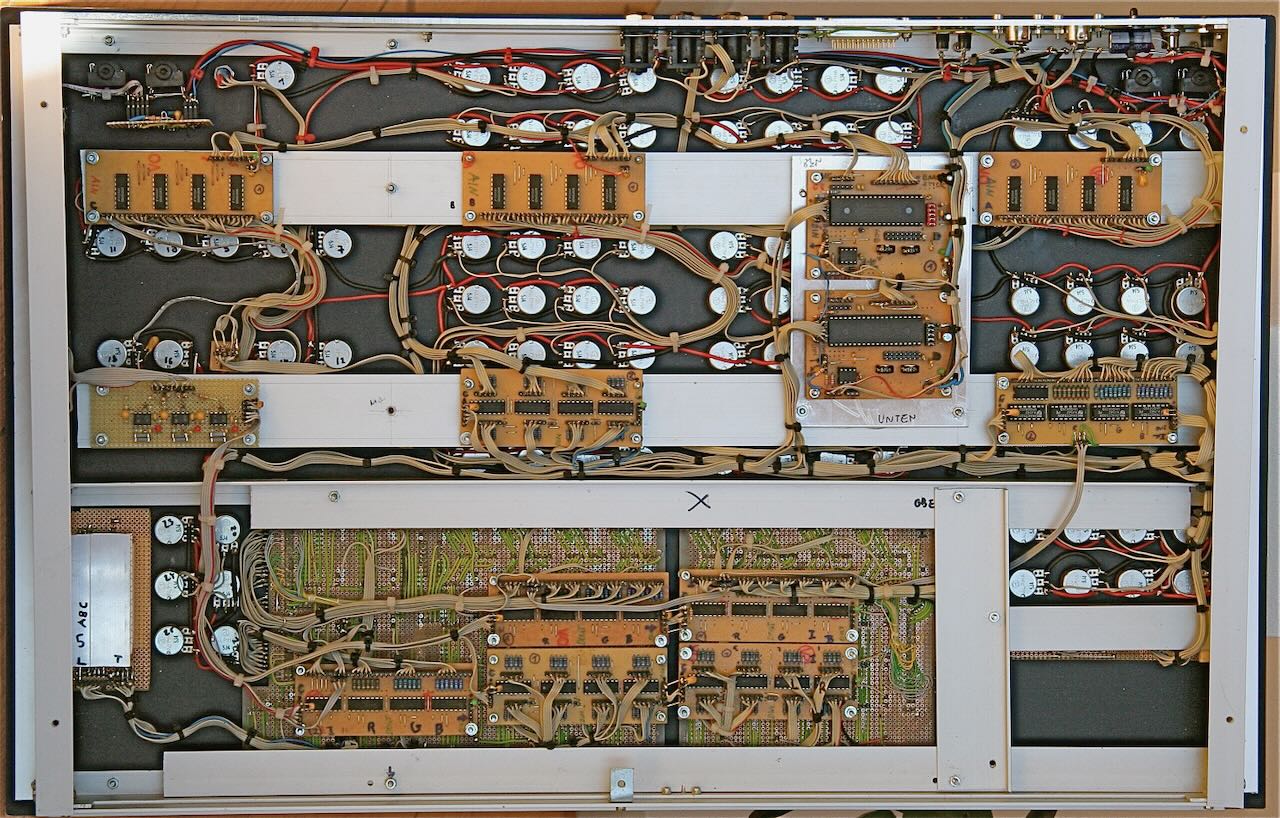
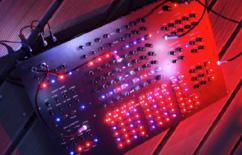
I started the first sketches for Monodeck II in the summer of 2005. The hardware was finished one year later; development of a new Monolake Live show took another six months. The first concert with Monodeck II was a very successful performance in Vilnius, Lithuania. Monodeck II allows me to perform concerts with a very high degree of freedom and room for improvisation, without even looking at the computer screen.
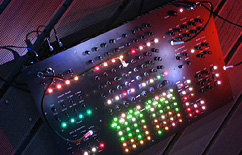
Monodeck II controls a mixer, a battery of effects units, a large number of software instruments, and an arbitrary number of MIDI loops hosted in Ableton Live. At any time during a performance, I am enjoying a huge degree of freedom: I can play a bass line from one track together with an altered version of a drum groove from another, maintaining interesting momentary states with tiny alterations in sound for extended periods, or jumping back and forth between different parts to create breaks of all kinds. Multicolor LEDs provide constant visual feedback and facilitate navigation through my set.
For Monodeck II, we wanted a more customized and flexible solution, so we decided to use MIDIBOX hardware modules (see credits). Inside Monodeck II, a microcontroller and additional electronics handle all data processing. To address Monodeck II’s 110 RGB LEDs, Ralf Suckow modified both the hardware and firmware of the core modules. The LEDs not only can be switched on and off to produce seven colors, but can also be dimmed via software. A special hardware extension allows adjustment of the overall color and brightness to match environmental lighting conditions.
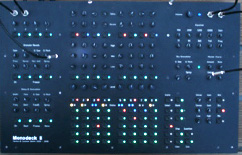
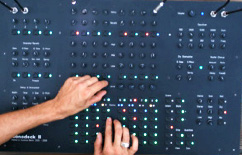
Live Integration
The more interesting work happens within a MAX patch acting as a bridge between Monodeck II and Ableton Live. This patch allows the assignment of a wide variety of functions to the buttons and enables the LEDs to be used for feedback. This makes Monodeck II a very open and expandable system, providing not only knobs but also an 8 × 8 LED button matrix. MIDI step sequencing, pads for launching sounds, remote FX control, and more are all possible within this structure.
Credits
Ralf Suckow: general support, electronics, PIC firmware, ideas, dedication, component hunting (RGB Leds !!!!)
Jan Buchholz: Python script & Live API
Thorsten Klose: MIDIBOX modules
Robert Henke: idea, concept, design, electronics, mechanical engineering, MAX patching
Monodeck II got decomissioned in 2011, after serving me very well for several years. It now found a retirement home on a shelf in my living room.
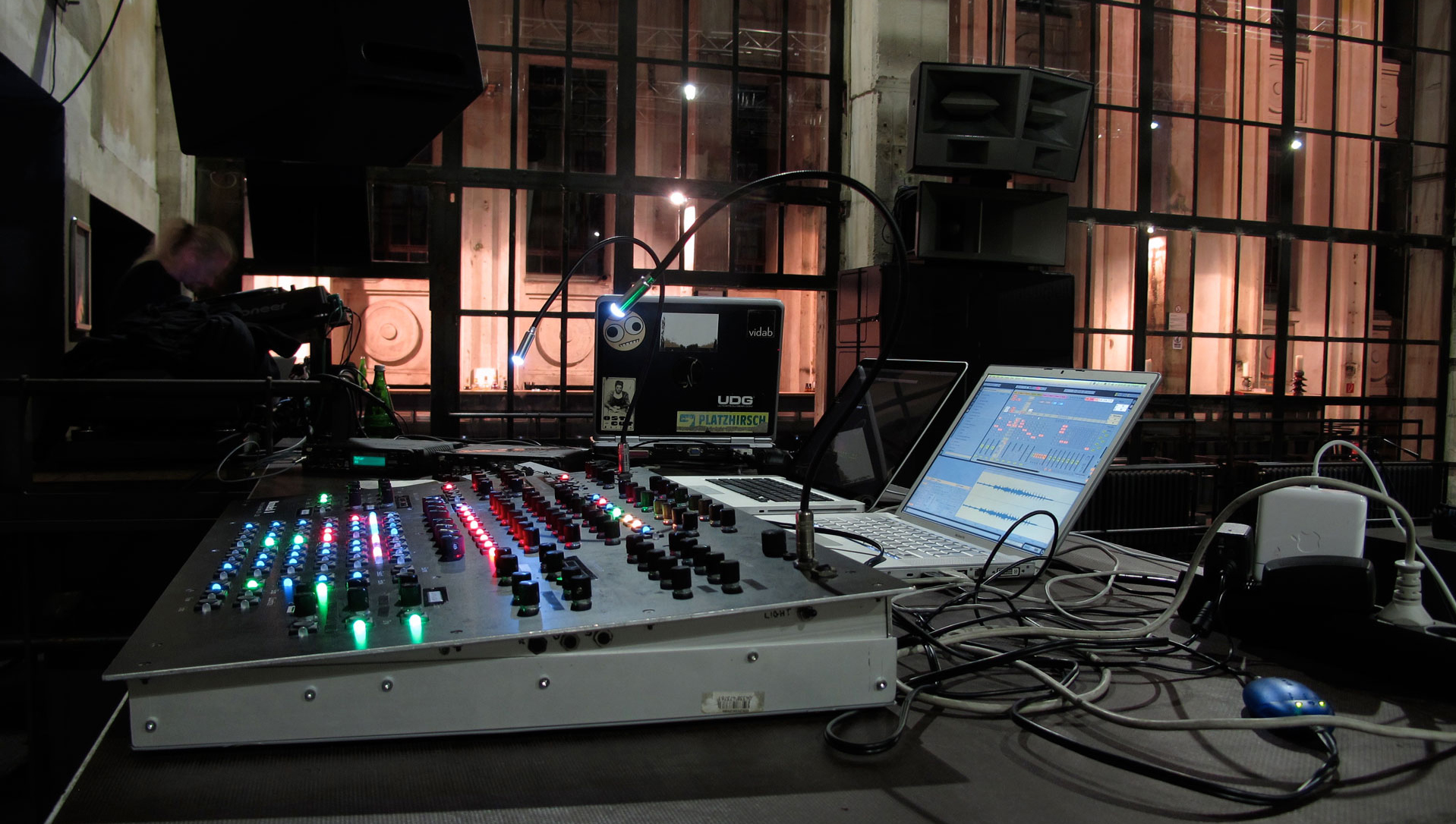
Monodeck II on stage for Monolake Surround at Berghain, 2010
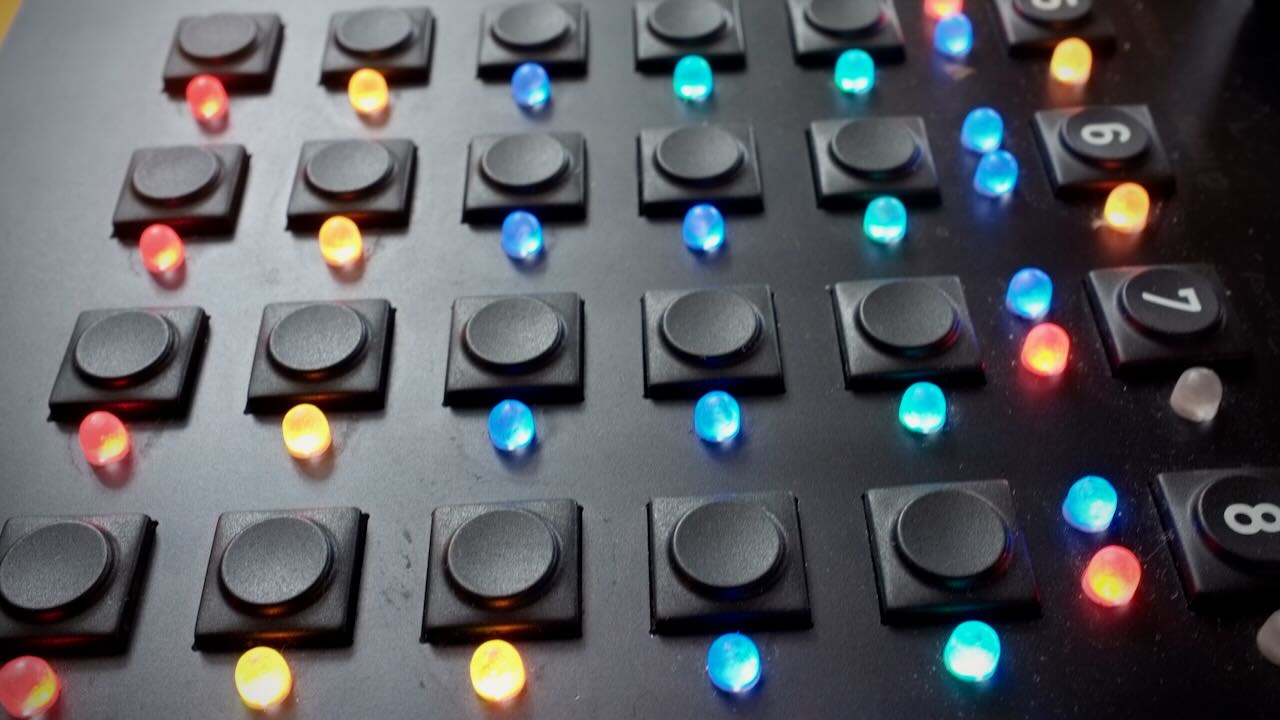
RGB LED detail